.svg)
Summary of the Panel Discussion with Vanessa Cann, Prof Dr Alexander Waibel and Yuval Harari (Video Message)

– Prof Yuval Noah Harari, Historian, Philosopher, Bestselling Author
– Vanessa Cann, AI Manager, Entrepreneur, Investor
– Prof Dr Alexander Waibel, Professor of Computer Science at Carnegie Mellon University and at the Karlsruhe Institute of Technology
– Host: Marc Kowalsky, Deputy Editor-in-Chief, BILANZ
The panel opened with a video address by historian, philosopher and bestselling author Yuval Noah Harari, who warned of a development already well underway: AI is increasingly making decisions that shape economies, security, education and social cohesion — often invisibly in the background. Harari described a near future in which AI quietly takes over critical decisions in everyday life, from energy systems and financial markets to education, justice and military operations.
His warning was not directed at technology itself, but at the speed of its deployment without sufficient societal safeguards. Unlike previous innovations, he argued, AI is beginning to affect the “central nervous system” of society by gradually shifting decision-making power from humans to opaque algorithms. Errors within this silent digital bureaucracy — where algorithmic systems increasingly determine access to credit, education, warfare and social participation — could have profound consequences. True progress, he argued, is not defined by maximum speed, but by responsibility: through regulation, international cooperation, effective oversight mechanisms, and the protection of human memory, judgement and empathy. His central question: how do we prevent speed in AI from being mistaken for progress?
The subsequent discussion with Vanessa Cann, one of the leading voices in Europe’s AI ecosystem, and Alexander Waibel, a highly decorated AI pioneer and expert in speech recognition, made one thing clear: AI offers enormous economic potential, but also poses far-reaching societal risks. Europe now faces a strategic choice.
Key Takeaways:
• We are only at the beginning of the AI revolution.
Despite the current hype, Europe remains largely in experimental mode when it comes to real-world AI adoption. So-called agentic AI may soon move beyond providing information to autonomously completing entire tasks.
• AI will not eliminate work, but it will fundamentally reshape it.
Many traditional roles will be automated, while entirely new ones emerge. Creativity, critical thinking and social intelligence will become increasingly valuable — skills machines can only replicate to a limited extent.
• Disruption also means the destruction of outdated business models.
Productivity gains are real, but not every company will benefit. Businesses that fail to adapt quickly enough may disappear from the market.
• The democratisation of knowledge and services.
AI is dramatically lowering barriers to entry. People without deep technical expertise can develop products, access services and bring ideas to life far more quickly.
• Europe needs its own AI strategy.
While the US drives innovation and China scales aggressively, Europe often begins with regulation. The panel argued that Europe must better leverage its strengths, including industrial expertise, specialisation and diversity.
• The real question is not what AI can do — but what kind of future we want to build.
The discussion ended on a call for greater optimism and strategic ambition: AI can create prosperity, fight disease and accelerate innovation, but only if societies consciously decide how they want to use it.
Conclusion:
Caught between optimism and loss of control, one thing became clear: AI is no longer a topic for the future. It is already reshaping business, labour markets and geopolitical power structures today. The real challenge now is to align innovation with responsibility before the speed of technological progress outpaces society’s ability to adapt.
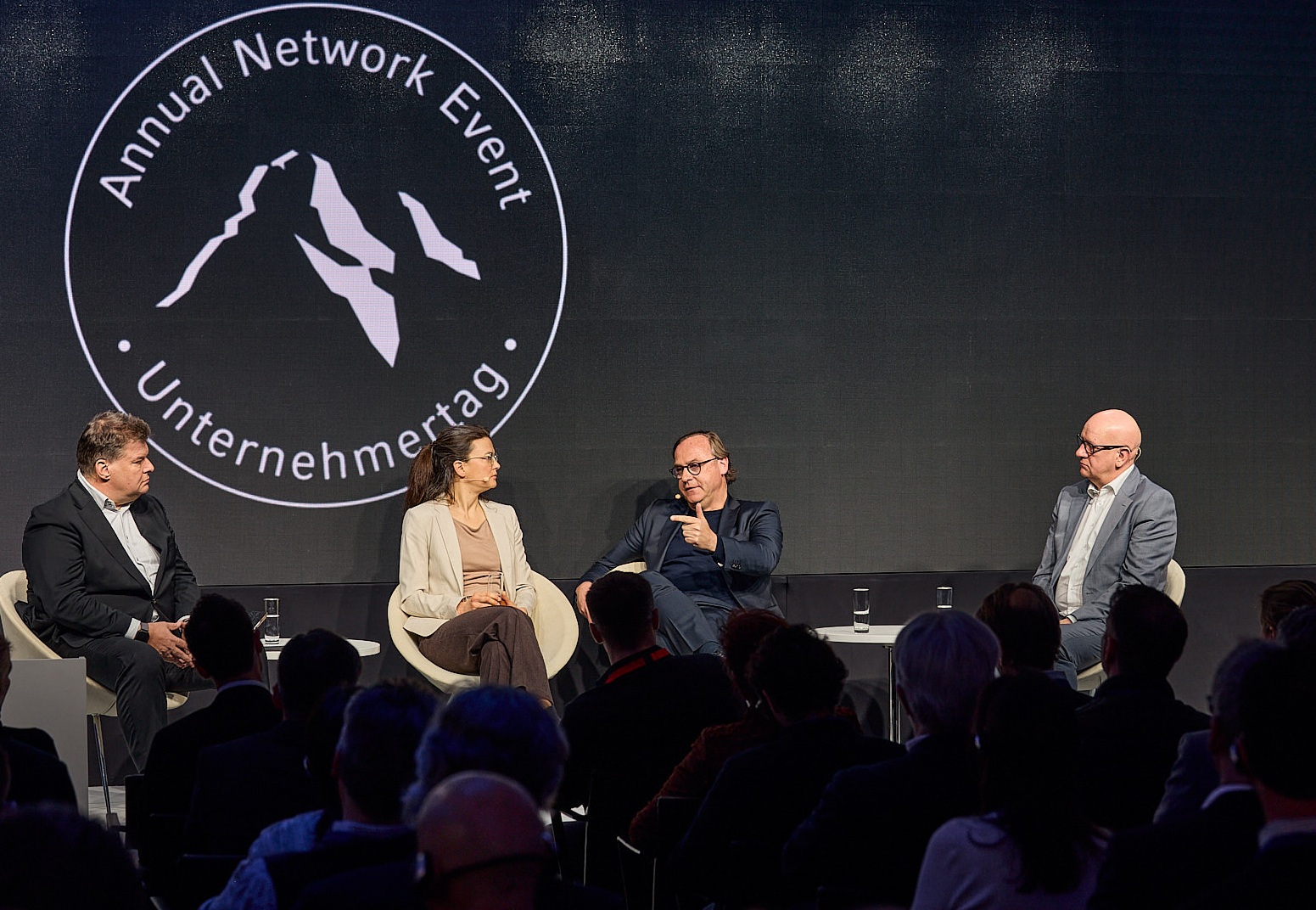
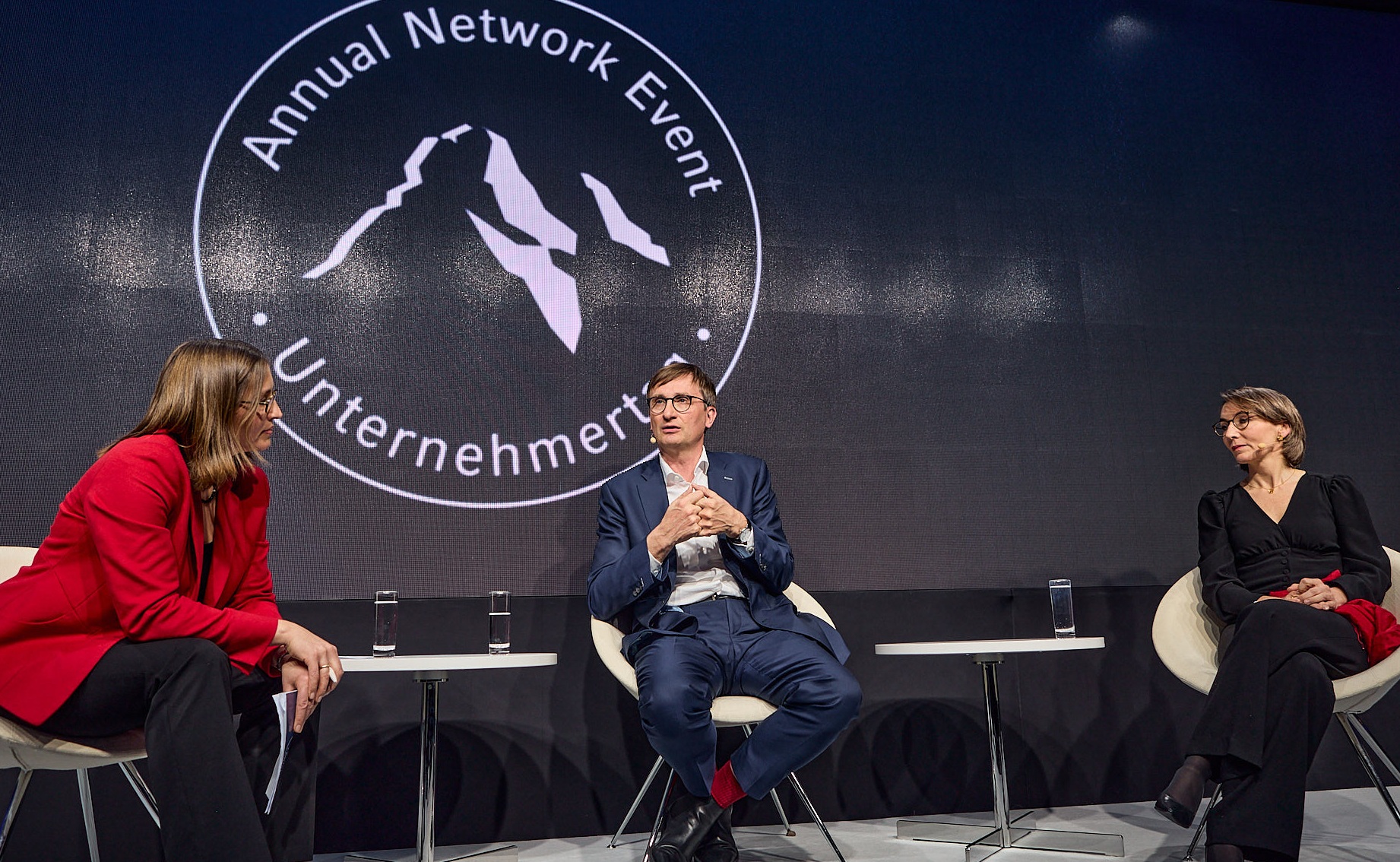
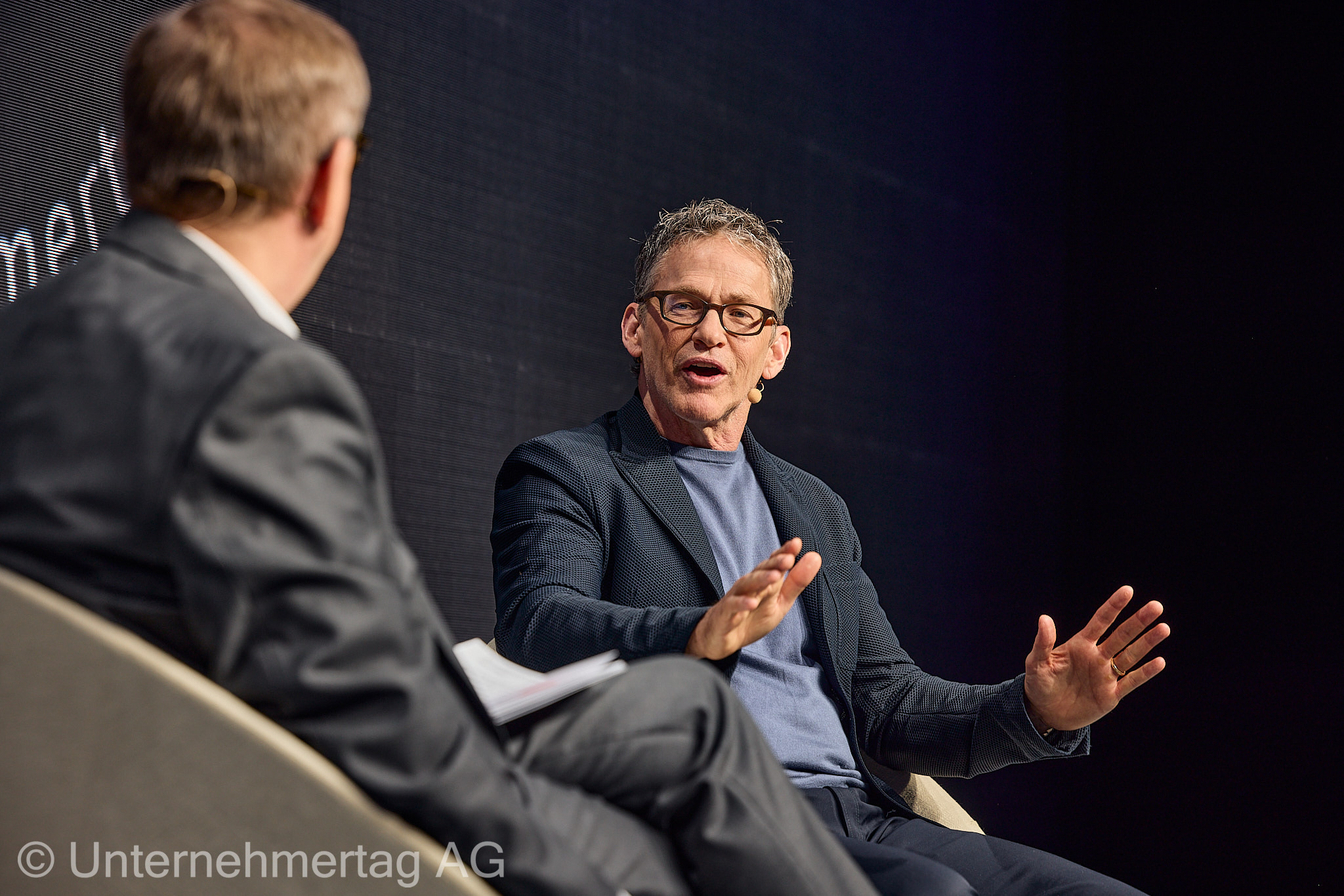
Photo: Marc Kowalsky, Vanessa Cann, Alexander Waibl (from left to right), ©Unternehmertag/Urs Golling
.svg)
.svg)
%201.svg)