.svg)
Key Takeaways from Dr Florence Gaub's Keynote at the Unternehmertag 2026
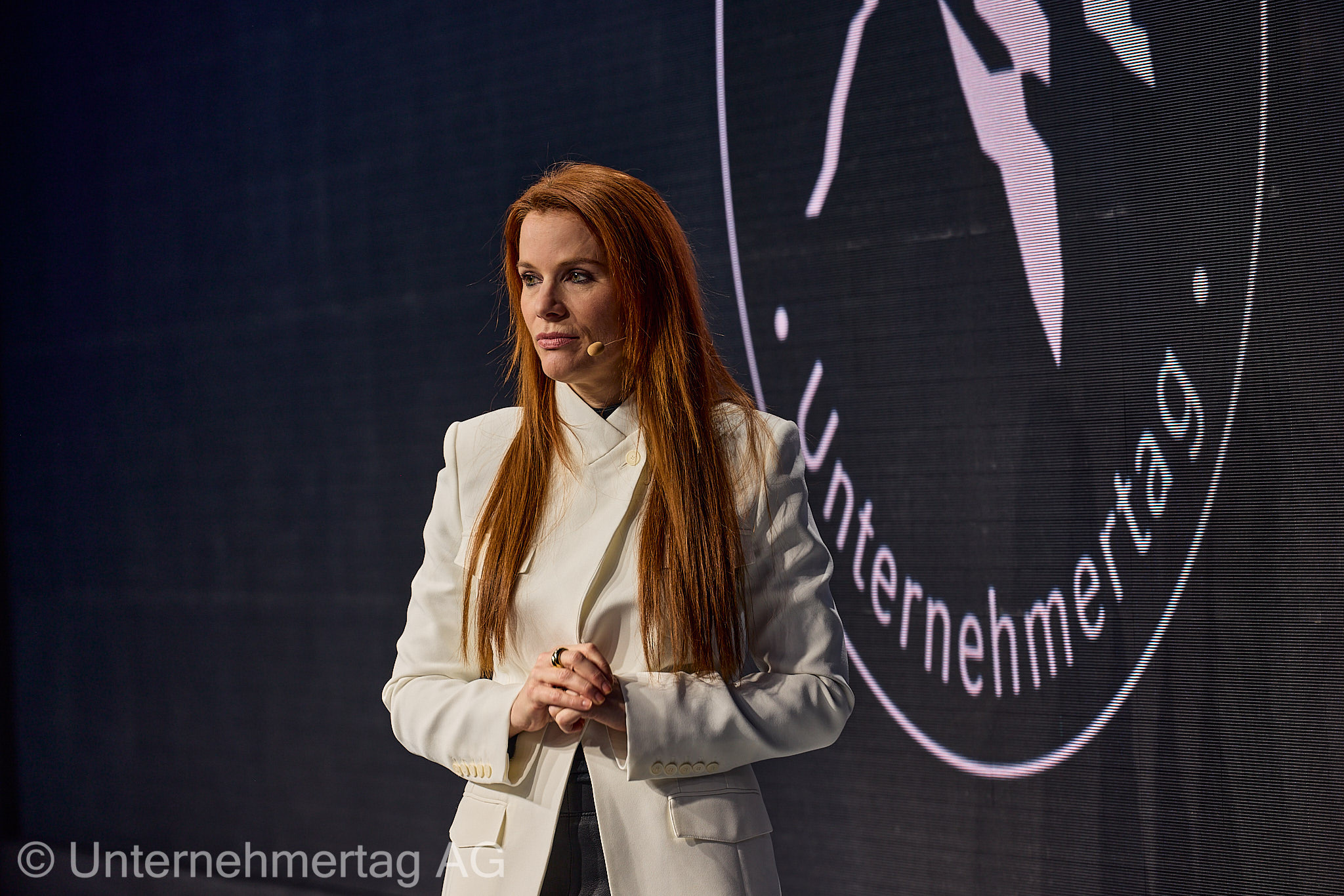
How does NATO think about the future? And how can we meaningfully discuss tomorrow in an increasingly uncertain world?
In her keynote, military strategist and futurist Dr Florence Gaub (Director of the Research Division, NATO Defense College, Rome) argued that the future should not be viewed as a predetermined destiny. Anyone seeking to understand what lies ahead must learn to navigate uncertainty rather than fixate on a single scenario.
With regard to European security, Gaub suggested that the real challenge lies less in specific threat scenarios than in Europe's ability to strengthen its own capacity to act. The United States has been calling on Europe to assume greater responsibility for years — not because of a lack of interest in Europe, but because its strategic and military resources are increasingly tied to the Indo-Pacific region.
At the same time, she cautioned against placing too much emphasis on specific dates or predictions of war. What matters most, she argued, is strengthening Europe's defence capabilities, resilience and critical infrastructure. Security does not begin at the border; it also depends on power grids, transport networks and the resilience of our societies.
Despite the challenges, Gaub concluded on an optimistic note. Crises are not only periods of heightened risk, but also moments that can foster innovation, creativity and social cohesion. The future remains open — and therefore ours to shape.
Key Takeaways
• The future is not a predetermined path, but a range of possible outcomes.
• Europe's greatest challenge is not only Russia or China, but its own ability to act and adapt.
• The United States is calling for greater European responsibility primarily for strategic and military capacity reasons.
• Deterrence and resilience are the two central pillars of European security.
• Critical infrastructure and societal resilience deserve greater attention than traditional invasion scenarios.
• Times of crisis create not only risks, but also opportunities for innovation, renewal and cohesion.
• Specific war forecasts and timeline-based predictions should be treated with caution.
Photo: Unternehmertag/Urs Golling
.svg)
.svg)
%201.svg)