.svg)
Fraternity in the Age of AI: A Personal Reflection / by Conny Boersch
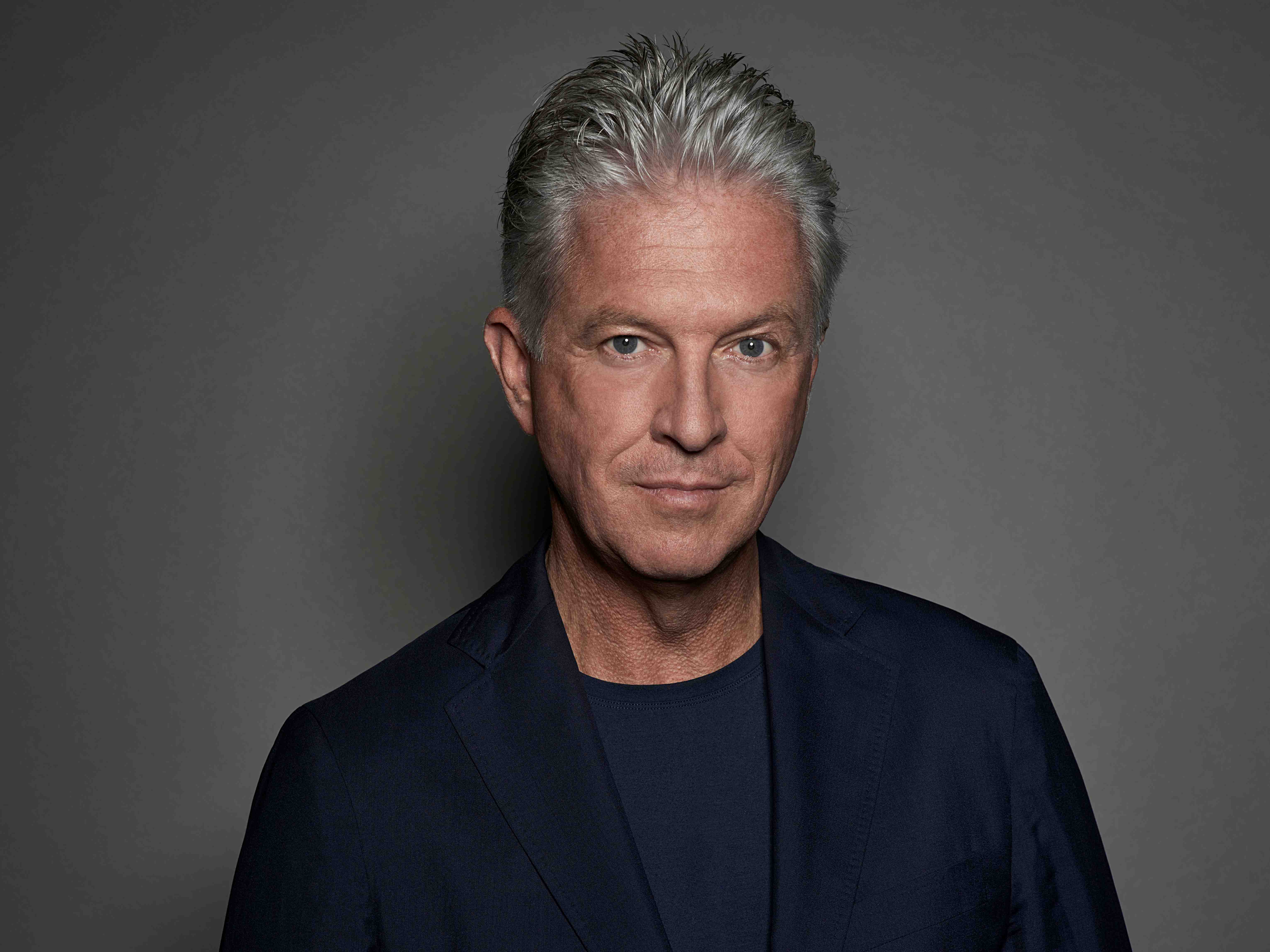
When I was invited last year, on the recommendation of my friend Enzo Cursio, to join an international Vatican working group on Artificial Intelligence, I was initially surprised.
Not because the subject of AI itself came as a surprise. I have been closely involved with technological developments for many years, investing in companies in this field and observing first-hand how profoundly AI is already transforming business, society and politics.
What surprised me was the seriousness with which the Vatican is approaching this issue.
Both Pope Francis and his successor, Pope Leo XIV, clearly regard Artificial Intelligence as one of the defining challenges of our time. And they have done something that institutions are not always known for: they have brought together people from very different backgrounds to reflect on it collectively.
Over a period of several months, our group of sixteen scientists, Nobel Prize winners, professors, technology experts and entrepreneurs met regularly online. Many of them – including the Israeli philosopher and bestselling author Yuval Harari, the British scientist Stuart Russell, the Ethiopian cognitive scientist and AI researcher Abeba Birhane, and the German computer scientist and large language model pioneer Alexander Waibel – are among the leading thinkers in their respective fields. Some have devoted their entire professional lives to the study of AI.
What impressed me most was the intellectual quality of the discussions. Rarely have I sat around a table with a group that was so international and diverse, yet at the same time so intelligent, thoughtful and open to different perspectives.
What struck me even more, however, was something else: I had assumed that we would spend most of our time discussing the opportunities created by Artificial Intelligence. Medical breakthroughs. Productivity gains. Education and prosperity. New possibilities for science and society.
Instead, the risks took centre stage.
Many of the scientists who have spent decades working on these issues view the development of AI far more critically than the public debate would suggest. Their concerns range from manipulation and disinformation to cybercrime, military applications, the long-term control of highly advanced AI systems and, yes, even the existential threat AI could pose to humanity itself.
What gave me particular pause was the urgency with which many of these experts spoke about the potential dangers and their repeated warnings against underestimating the pace and significance of current developments. It changed the way I think about the subject.
Not because I have suddenly become a technological pessimist. Quite the opposite. I remain convinced that AI offers extraordinary opportunities for humanity. What became clearer to me, however, is that the real challenge may not be the technology itself. The real challenge is us humans.
Today, I am less concerned about Artificial Intelligence itself than I am about individuals, states and organisations that may use the power of AI recklessly and without regard for the consequences.
We are witnessing a global race for technological supremacy. Hundreds of billions, and ultimately trillions, of dollars are being invested in increasingly powerful AI systems. The United States is investing heavily. China is investing heavily.
Europe is regulating.
Regulation matters. But regulation alone will not be enough.
AI is no longer simply a technological issue. It is about economic strength, geopolitical influence, national security and, ultimately, about who will shape the rules of the future. I fear Europe will not be among them.
We missed the train, despite the fact that many of the world's leading scientists and AI pioneers came from Europe. Europe will pay a high price for its hesitant and restrictive approach. Public institutions such as the European Investment Bank and Germany's KfW have failed to provide the necessary support. But responsibility also lies with us as a society. Too few investors were willing to take meaningful risks when it mattered most. As a result, Europe increasingly risks becoming a customer rather than a creator, paying others to use technologies it failed to build.
At the same time, my experience working with the Vatican left me with a positive impression. For the first time, I felt that a religious institution was making a serious effort to integrate scientific expertise into its thinking in a systematic way. This was not about faith versus science. It was about bringing together science, ethics and social responsibility.
That is also the central message of the paper “Fraternity in the Age of AI”, which emerged from this process. It starts from the conviction that AI will fundamentally shape humanity's future and therefore requires clear ethical guardrails.
Its core message is simple: Artificial Intelligence must serve humanity, not the other way around.
That may sound self-evident. In an age of increasingly powerful AI systems, it is anything but.
The paper therefore calls for clear rules. Human dignity, accountability, transparency and meaningful human oversight must remain fundamental principles in a world increasingly shaped by intelligent machines. Decisions involving life and death should never be delegated entirely to algorithms. The benefits of AI should be shared broadly and not concentrated in the hands of a small number of states or corporations.
I do not agree with every recommendation unreservedly. In some discussions, I was probably the most pragmatic voice in the room. Questions of defence and security, in particular, often generated lively debate.
Yet that was precisely the value of these conversations. People with fundamentally different perspectives were willing to listen to one another. At a time when so many public debates are characterised by polarisation, I found that deeply encouraging.
The development of Artificial Intelligence will not wait until we reach consensus. But we can decide which values will guide our response to it.
Perhaps that is the most important lesson I took away from the Vatican. And the discussion is far from over.
On the contrary, the questions are becoming larger and more urgent. That is why our working group will reconvene in the Vatican on 15 July for a three-day meeting focused on a subject that would have sounded like science fiction only a few years ago: the relationship between Artificial Intelligence and nuclear risk.
How will AI reshape strategic deterrence? What impact will it have on military decision-making? What dangers arise when increasingly powerful systems are deployed in areas critical to national and global security? And how can we ensure that technological progress does not outpace the ethical and political frameworks designed to govern it?
The questions are becoming more complex. The responsibility is growing. Which is precisely why we must have these conversations now, not after the technology has already created irreversible facts on the ground.
Conny Boersch
.svg)
.svg)
%201.svg)