.svg)
A Look Back at our Panel with Ambassador Heiko Thoms and Rear Admiral (ret.) Stefan D. Pauly; moderated by Rixa Fürsen (Politico)
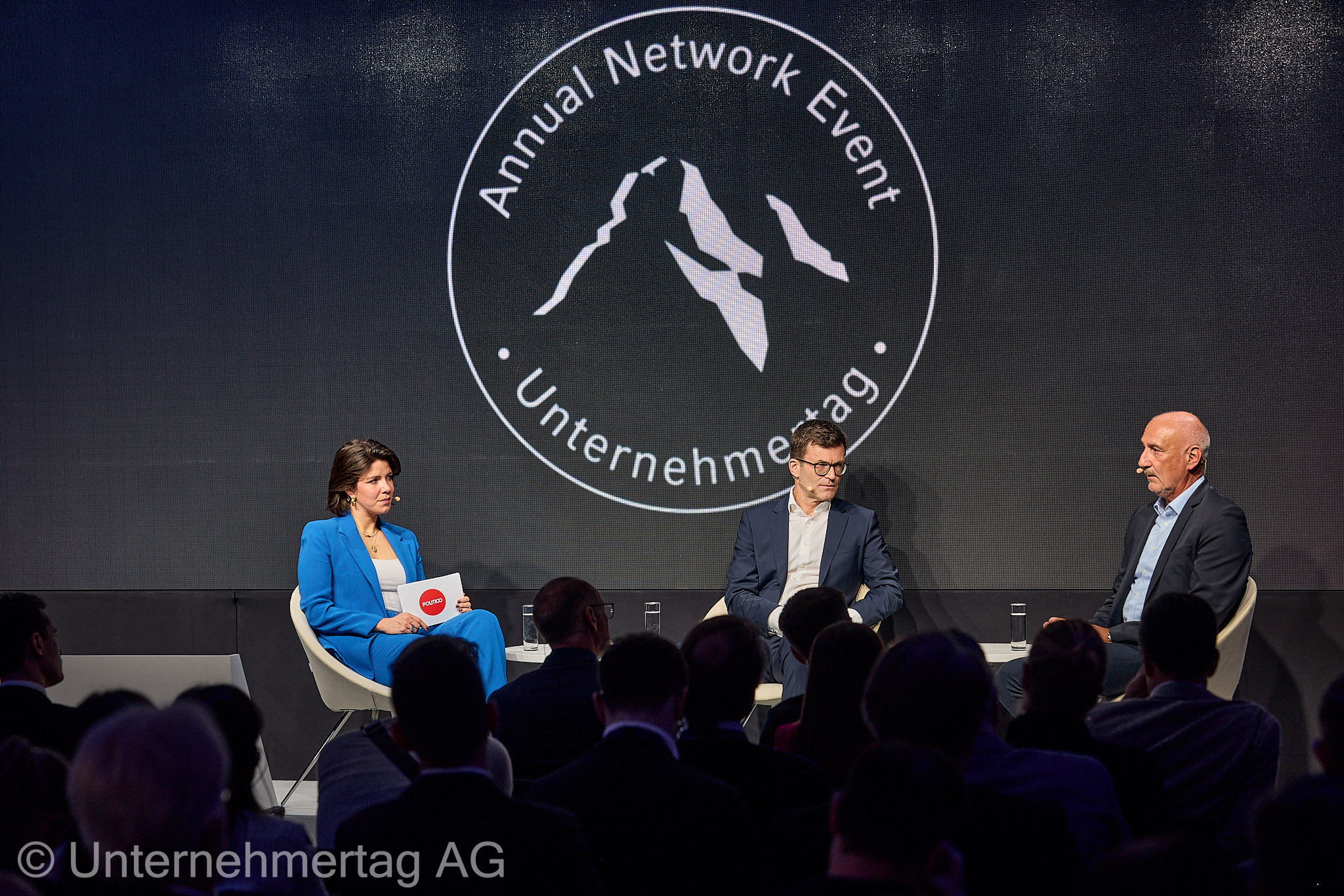
Russia’s war of aggression against Ukraine has fundamentally reshaped Europe’s security landscape. The discussion with Heiko Thoms (German Ambassador to Ukraine) and Stefan D. Pauly (Rear Admiral, ret., Head of the Board of Advisors, Eraneos) made clear that the question is no longer whether Europe must assume greater responsibility for its own defence, but how quickly and decisively it can do so. At the same time, it was emphasised that supporting Ukraine is not merely an act of solidarity with a country under attack; it is directly linked to Europe’s own security and strategic interests.
A particularly striking part of the discussion focused on the situation in Ukraine itself. The past winter posed enormous challenges for the population. For more than six consecutive weeks, temperatures remained well below freezing, often reaching below minus 20 degrees Celsius. It was the coldest winter Ukraine had experienced since 1999. At the same time, Russia continued its systematic attacks on the country’s energy and utility infrastructure, leading to power outages, disruptions to water supplies and unheated homes. Yet despite these hardships, the resilience and determination of the Ukrainian people remain unbroken. If anything, the attacks on civilian infrastructure have strengthened rather than weakened their resolve.
Looking at Europe’s future defence capabilities, the panel argued that the lessons of Ukraine require a fundamental rethink of defence procurement and the European defence industry. Many conventional weapons systems are now being used in ways that were never originally envisaged. At the same time, drones, robotics, automation and autonomous systems are becoming increasingly important. This is not only a technological shift but also a response to demographic realities. As Europe faces a shrinking pool of military personnel, questions about who will operate tanks, ships and other military assets are becoming ever more pressing.
Ukraine already demonstrates how rapidly innovation can be developed, adapted and deployed on the battlefield. One of the discussion’s most memorable observations was that while many Western nations are still preparing for tomorrow’s war with yesterday’s weapons, Ukraine is fighting today’s war with the weapons of tomorrow. The close cooperation between industry and the armed forces, together with Ukraine’s remarkable ability to adapt, was highlighted as an important example for Europe to follow.
The discussion also underscored the importance of resilience beyond the military sphere. Defence capability is not solely a matter of armed forces and defence spending. It also depends on resilient businesses, robust critical infrastructure and a population that is prepared for crises and emergencies. Europe must increasingly view defence as a whole-of-society responsibility.
Despite the challenges, the overall outlook remained cautiously optimistic. Europe possesses the economic, technological and political foundations required to strengthen its security in the long term. However, this will require a willingness to modernise existing structures, deepen cooperation and systematically apply the lessons learned from Ukraine.
Key Takeaways
• Supporting Ukraine remains a central pillar of European security.
• With temperatures falling below minus 20 degrees Celsius and more than six weeks of continuous sub-zero conditions, the winter of 2024/25 was the harshest Ukraine has experienced since 1999.
• Europe must fundamentally rethink its defence procurement processes and defence-industrial base to meet the demands of modern warfare.
• Robotics, automation and autonomous systems will become increasingly important, not least because demographic change is reducing the number of military personnel available in the long term.
• Ukraine demonstrates how rapidly innovation can be developed, adapted and deployed. The Ukrainians are fighting today’s war with the weapons of tomorrow.
• Defence capability extends beyond the military and includes resilient businesses, critical infrastructure and a prepared society.
• Europe has the resources it needs, but it must act faster, innovate more effectively and cooperate more closely.
Photo: Unternehmertag/Urs Golling
.svg)
.svg)
%201.svg)