.svg)
Summary of the Panel with Prof Lars-Hendrik Röller and Prof Lucrezia Reichlin
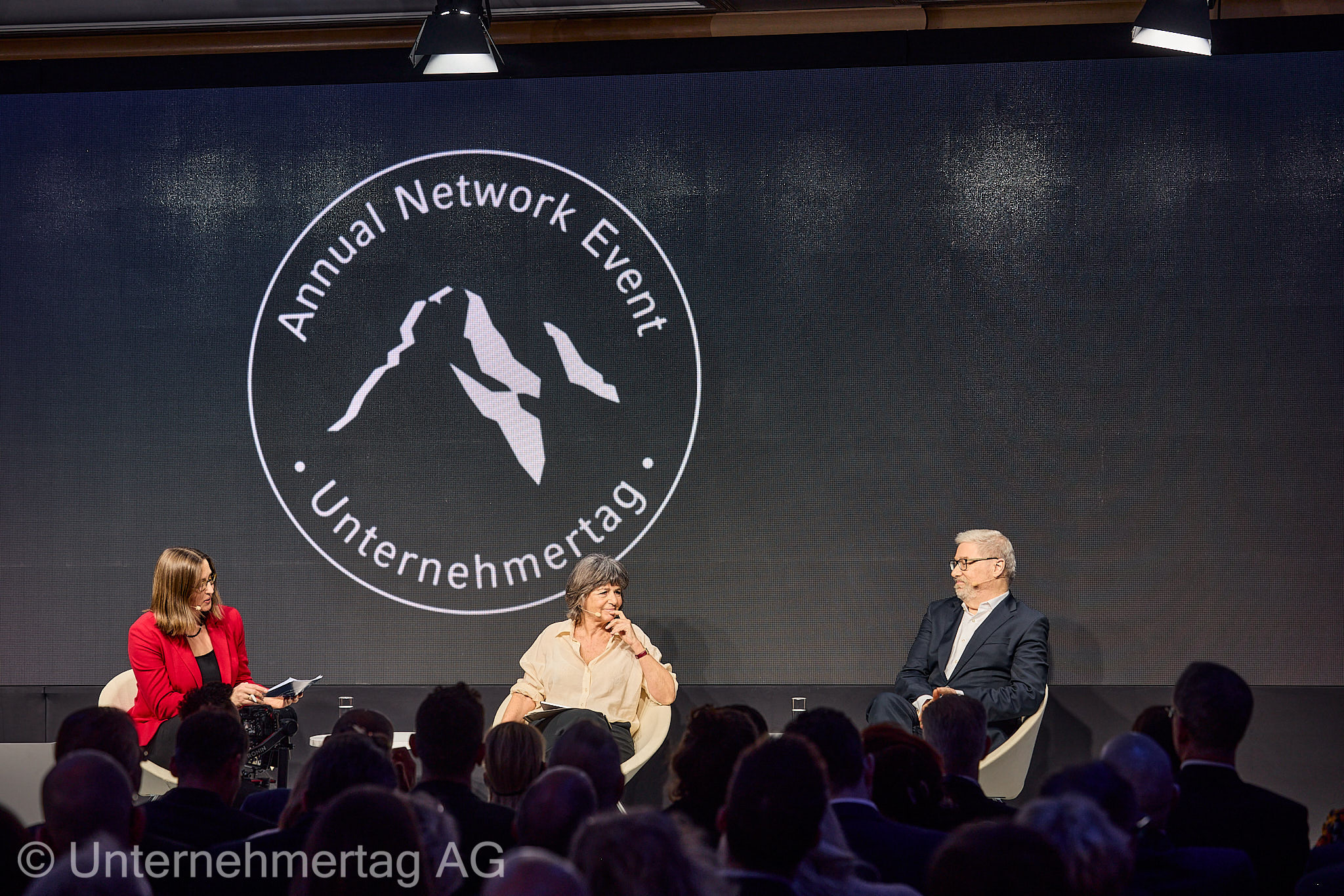
Key Takeaways of the Panel discussion on 19. March with Prof Lars-Hendrik Röller (Berlin Global Dialogue) and Prof Lucrezia Reichlin (London Business School), Host: Anja Wehler-Schöck (Der Tagesspiegel):
• Geopolitical shocks as economic stress test
The escalation around Iran is seen as a potential major disruptor for the global economy, with Europe particularly vulnerable due to its energy dependence and exposure to external shocks.
• Europe risks facing structural disadvantages
Beyond immediate impacts (oil, inflation, supply chains), there is a broader concern that Europe could emerge as one of the long-term economic losers if it fails to address internal weaknesses.
• Europe must strengthen its impact from within
A recurring theme: Europe’s biggest challenge is not external pressure, but insufficient internal coordination, slow decision-making and unresolved structural issues.
• A decisive moment: fragmentation or integration
Two contrasting scenarios emerge:
o Europe uses the crisis to accelerate integration, competitiveness and strategic autonomy
o Or fragmentation deepens, with coalitions of willing countries moving ahead outside full EU consensus
• Strategic autonomy requires scale and institutions
Europe has strong fundamentals (market size, education, industrial base), but lacks:
o integrated capital markets
o effective common financing instruments
o coordinated industrial and defence policies
• Capital Markets Union as critical lever
Building a genuine European capital market is seen as essential to finance innovation, defence and technological leadership at scale. Further integrative steps must first be taken before taking on more common EU debt.
• Public–private ecosystems, not just public spending
Europe should focus less on CARBON TAXES AND subsidies alone and more on creating innovation ecosystems (comparable to historic US models like DARPA) that crowd in private capital.
• Dependence on the US remains a strategic vulnerability
Europe is still heavily reliant on the US in security, intelligence and key technologies. Reducing this dependency is framed as a long-term strategic necessity.
• Defence, technology and energy as core pillars
Greater coordination in defence capabilities, AI, infrastructure and energy systems is essential for Europe to remain competitive and secure.
• Pragmatic global trade strategy instead of ideology
Globalisation is not dead,but changing. Europe should:
o act more pragmatically in trade policy
o combine instruments beyond tariffs
o strategically intense and diversify partnerships (e.g. Africa, China, India, Latin America)
• Rules-based order is weakened, not gone
While under pressure, a large share of global trade still operates under multilateral rules. Reform – not abandonment – is required.
• Political pressure as catalyst for reform
Meaningful change in Europe is unlikely without external pressure and domestic dissatisfaction. Crises may therefore act as the trigger for overdue reforms.
SUMMARY
Europe is entering a period of profound economic and geopolitical uncertainty. The discussion made clear that current conflicts and global power shifts are not only short-term market risks, but a far-reaching stress test for Europe’s economic model, political cohesion and strategic resilience.
A central concern was Europe’s continued vulnerability to external shocks, particularly in energy, security and critical technologies. While immediate risks such as rising oil prices, inflation and supply chain disruption were addressed, the broader focus lay on Europe’s structural weaknesses: slow decision-making, fragmented capital markets and an incomplete single market.
At the same time, the conversation struck a cautiously optimistic note. Europe still has major strengths: a large common market, a highly educated population and significant industrial capabilities. The key question is whether the current pressure will finally lead to decisive action. Greater coordination in defence, technology, infrastructure and financing was seen as essential if Europe wants to strengthen its competitiveness and reduce strategic dependencies.
The debate also underlined that Europe must think more pragmatically about trade and global partnerships. Rather than retreating from globalisation, the task is to navigate a more contested world with greater strategic clarity, maintaining ties with key partners, diversifying economic relationships and defending Europe’s interests with more confidence.
The panel concluded that Europe now stands before a defining choice: either use the current moment to deepen cooperation, invest at scale and build greater resilience — or risk falling further behind in an increasingly competitive global order.
.svg)
.svg)
%201.svg)